2026 How to Choose the Right Punch Die for Your Needs?
Choosing the right punch die is crucial for efficiency and quality in production. According to industry expert John Stevens, “Selecting a punch die is not just about size; it’s about understanding the material and the desired outcome.” His insight underlines the complexity of this decision.
Punch dies vary significantly in design and functionality. This variability demands careful consideration of your specific needs. For instance, using the wrong punch die can lead to material waste and production delays. A punch die that fits poorly may also affect the finished product's quality.
Evaluating your requirements can be challenging. Factors such as material type, thickness, and production volume play critical roles. Engaging with professionals can help simplify this process. However, it is essential to reflect on the experiences from previous projects. Overlooking details might lead to costly mistakes. Understanding these dynamics helps refine your selection process for a suitable punch die.
Understanding the Basics of Punch Dies and Their Applications
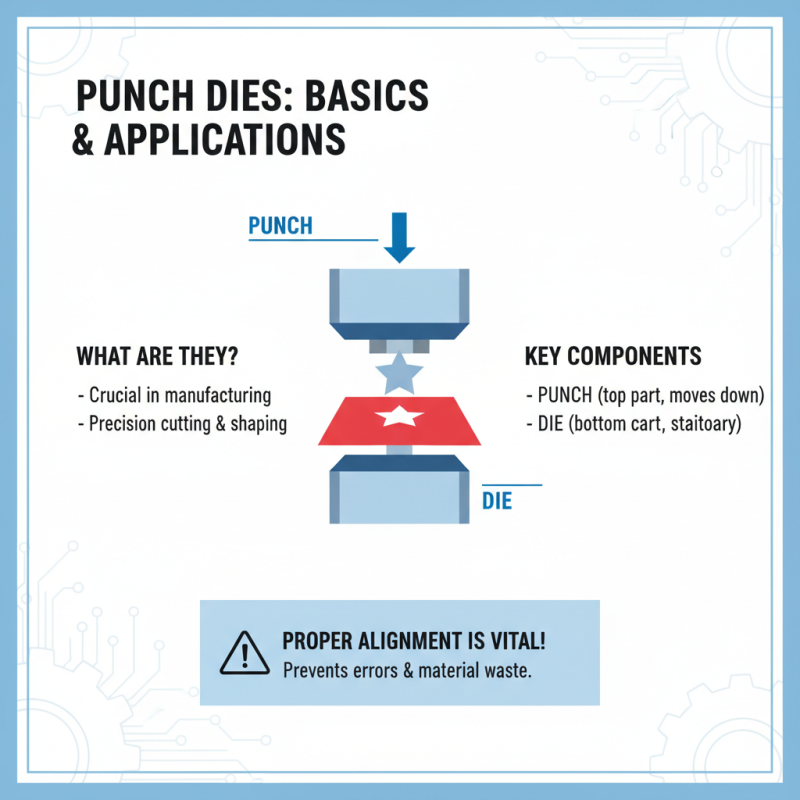
Punch dies are crucial in manufacturing. They enable precision cutting and shaping of materials. Understanding punch dies is essential for optimal use. A punch die consists of two main parts: the punch and the die. The punch moves downwards, forcing the material into the die, creating a specific shape. Proper alignment is vital. Misalignment can lead to errors and wasted materials.
Different applications use punch dies in diverse ways. For instance, in the automotive industry, they create intricate parts with tight tolerances. In electronics, they shape connectors and housings. Each application has unique requirements. Selecting the right die needs careful consideration of factors like material type and thickness.
Reflection is key when assessing die performance. Sometimes, manufacturers underestimate the impact of wear and tear on the dies. Regular maintenance is crucial to prolong their lifespan. Additionally, it's important to keep an eye on production rates. A die that works well at a certain speed may not be suitable for another. This necessitates ongoing evaluation and adjustments.
Identifying Your Specific Needs for Punch Die Selection
Selecting the right punch die requires a clear understanding of your specific needs. Begin by assessing the material you will work with. Different materials need different die hardness and design. For instance, softer materials may require a more flexible die, while harder materials benefit from higher durability.
Next, consider the intended application. Are you creating intricate shapes or simple cuts? Complex designs might need specialized punch dies with unique geometries. Keep in mind the production volume as well. High-volume projects may demand dies that can withstand extensive use without compromising their precision and quality over time.
Additionally, reflect on your budget and timeline. Quality dies might come at a higher price but can save money in the long run. Delays can occur if you choose a die that isn’t suited for your task. Assessing all these factors can guide you toward a punch die that aligns with your operational demands. It's crucial to balance between cost, performance, and longevity.
Key Factors to Consider When Choosing a Punch Die
Choosing the right punch die requires careful consideration of various factors. First, think about the material you will be using. Different materials require different types of dies. For instance, softer metals may demand less durable dies. Harder materials will need tougher options to withstand wear and tear.
Another key factor is die size. Accurate measurements are essential for precision work. A die that is too large or too small can result in wasted material and time. Consider the shape of the die as well; specific shapes serve particular needs. If you often create intricate designs, a specialized die may be necessary.
Also, reflect on the production volume. Higher volumes may benefit from robust dies, whereas smaller projects might not justify the investment. Lastly, stay informed about the latest developments in die technologies. Continuous learning helps you choose wisely. Always seek feedback from other professionals if you're unsure about your choice. This approach can lead to a more suitable selection of punch dies for your projects.
Key Factors to Consider When Choosing a Punch Die
Common Materials Used for Punch Dies and Their Benefits
When selecting a punch die, it's crucial to understand the materials commonly used in their construction. Tool steel is a popular option. It’s known for its durability and resistance to wear. This makes it a great choice for high-volume production. However, it can be prone to rust without proper care.
Another material to consider is carbide. Carbide punches are incredibly hard and maintain their edge longer than steel. They work well with harder materials, leading to a cleaner cut. On the downside, carbide can be more brittle. This can lead to breakage under excessive stress.
Then there’s aluminum, an often overlooked option. It’s lightweight and less harsh on tooling when used. Aluminum dies can produce smooth finishes but are not suitable for heavy-duty applications. Each material has its pros and cons, and the choice depends on your specific needs. Evaluating these factors can ensure efficient production and minimize unexpected failures.
2026 How to Choose the Right Punch Die for Your Needs?
| Material |
Benefits |
Suggested Applications |
| Tool Steel |
Good toughness and wear resistance |
General punching applications |
| HSS (High Speed Steel) |
Excellent wear resistance, high temperature tolerance |
Used for high-speed applications and precision cutting |
| Carbide |
Incredible hardness and durability |
Ideal for high-volume production and tough materials |
| Stainless Steel |
Corrosion-resistant, good strength |
Food and medical industries, outdoor tools |
| Aluminum |
Lightweight, good machinability |
Applications where weight is a concern |
Tips for Maintaining and Troubleshooting Punch Dies
Maintaining punch dies is essential for consistent performance in manufacturing. Regular inspection can reveal wear patterns that may affect efficiency. Statistics show that about 70% of die failures result from inadequate maintenance. Only 30% are due to design flaws or material issues.
To extend die life, consider lubrication methods. Proper lubrication reduces friction, preventing undue wear. A study from an industry publication indicated that consistent lubrication could increase die lifespan by nearly 40%. Always check lubrication levels before each use.
Troubleshooting issues promptly can save costs. If a die shows uneven wear, it may be misaligned. Misalignment is a common issue, often overlooked. Checking alignment before the initial run can minimize production downtime. Regular training for machine operators can also enhance troubleshooting skills, ensuring a smoother workflow.